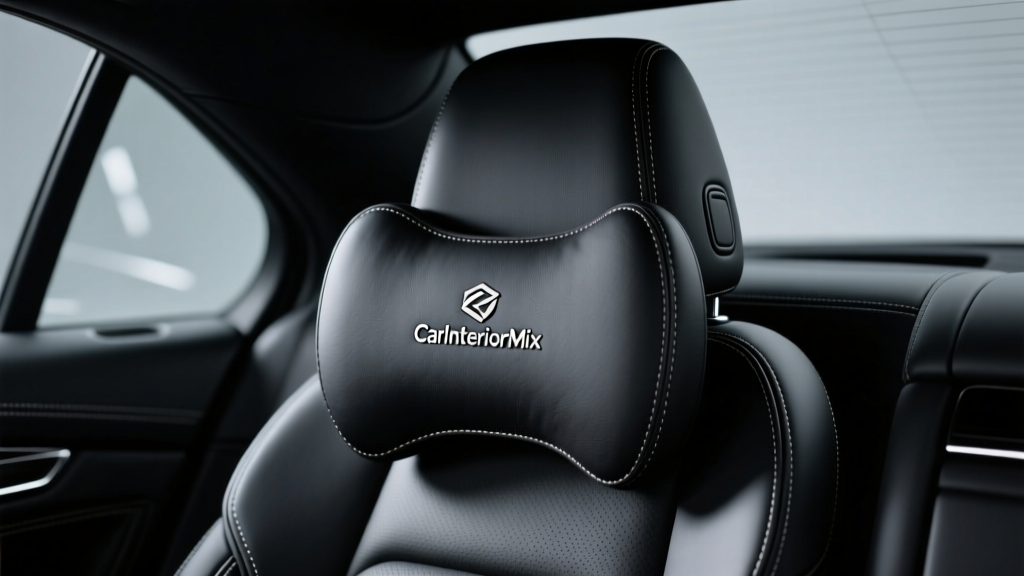
Headrest Cover Compatibility by Car Model (2026)
Headrest covers are one of those small interior upgrades that can make your cabin feel cleaner, newer, and more ?you? in a single afternoon. They protect high-touch surfaces from hair oils, sunscreen, sweat, pet dander, and the scuffs that happen when you toss a jacket over the seat. If you?ve ever tried to scrub stains out of perforated leather or textured cloth, you already understand why a removable cover is a smart move.
Compatibility is where most upgrades go sideways. Headrests look simple, but designs vary wildly by car model and trim: removable vs integrated headrests, two-post vs single-post designs, fixed rear headrests, active head restraints, seat-mounted airbags, and tricky tilt/height mechanisms. A cover that fits one model year of the same vehicle can bunch up, block adjustment buttons, or fail to secure properly on another year.
This guide (Part 2) focuses on real-world headrest cover compatibility by common car models and seat designs, along with practical steps to confirm fitment before you buy. You?ll also get installation tips, product comparisons, and mistakes to avoid so your upgrade looks OEM-clean and stays put.
What ?Compatibility? Really Means for Headrest Covers
Most buyers assume ?universal? headrest covers will work everywhere. In practice, headrest cover compatibility depends on four things:
- Headrest style: removable (two posts), integrated (one-piece seatback), fixed rear, or specialty/active designs
- Dimensions: width, height, depth, and corner shape (square vs rounded vs winged)
- Hardware clearance: post spacing, release buttons, tilt levers, and guide sleeves
- Material behavior: stretch fabric vs leatherette vs neoprene; thick materials can fight tight headrests
Quick rule: Two-post removable headrests are the easiest. Integrated headrests are the hardest and usually require a model-specific or ?integrated headrest? cover design.
Compatibility by Car Model (Part 2): What Typically Fits and What to Watch
Below are common patterns you?ll see across popular models. Always verify your exact year and trim, especially if your vehicle had a mid-cycle refresh.
Honda: Civic, Accord, CR-V, Pilot (Common Fit Profiles)
- Honda Civic (most years/trims): Front headrests are typically two-post removable and friendly to universal stretch covers. Watch for sport trims with tighter headrest shapes.
- Honda Accord: Usually straightforward two-post front headrests. Rear center headrest may be smaller or a different shape than the outers?buy a set that includes multiple sizes if possible.
- Honda CR-V: Generally compatible with universal covers, but rear headrests can be more squared-off; a cover with adjustable elastic or a rear zipper fits cleaner.
- Honda Pilot: Third-row headrests (if equipped) can be compact and oddly proportioned; prioritize sets with ?small? covers included.
Real-world tip: If your Honda has height-adjustable headrests, choose covers with a post opening that doesn?t fray (reinforced grommets or stitched slots). Cheap elastic openings can tear over time.
Toyota: Corolla, Camry, RAV4, Highlander
- Toyota Corolla: Most trims use slim headrests; avoid bulky padded covers that will look oversized and wrinkle.
- Toyota Camry: Usually a great match for mid-size universal covers. If you have leather seats, a thinner cover material keeps the profile OEM.
- Toyota RAV4: Front and rear headrests often work well with stretch-fit and zipper-back styles. Watch for angled headrests on some model years; a cover with a contour seam sits better.
- Toyota Highlander: Similar to Pilot?rear rows may have different headrest sizes, so mixed-size sets reduce the ?one cover doesn?t fit all? problem.
Watch-out: Some Toyota headrests have active head restraint mechanisms. Covers should be snug but not overly tight, and they should not add thick padding that restricts movement.
Nissan: Altima, Rogue, Sentra, Pathfinder
- Nissan Altima/Sentra: Typically compatible with universal two-post covers. For fabric seats, choose breathable materials to reduce heat buildup.
- Nissan Rogue: Rear headrests can be thicker; zipper-back covers help avoid ?bubble? wrinkles.
- Nissan Pathfinder: Multiple rows often mean multiple headrest sizes; verify each row?s dimensions before ordering a single-size kit.
Real-world example: Owners often buy a ?front-only? set and later try to match rears. It?s harder to color-match later, so if you plan to do the whole cabin, buy everything at once.
Hyundai/Kia: Elantra, Sonata, Tucson, Santa Fe, Forte, Sportage, Telluride
- Hyundai Elantra/Kia Forte: Usually slimmer headrests; pick low-profile covers with strong elastic.
- Hyundai Sonata/Kia K5: Headrests are often wider and more sculpted; contoured or seam-structured covers look cleaner than flat ?sock? styles.
- Tucson/Sportage: Good universal fit, but if you have synthetic leather seats, consider leatherette covers for a cohesive look.
- Santa Fe/Telluride: Large cabin with varied headrest sizes across rows; look for kits offering size variation and strong closure systems.
Tip: Many Hyundai/Kia interiors use modern textures (perforations, contrast stitching). A headrest cover with subtle stitching can look more factory than a shiny, smooth finish.
Subaru: Outback, Forester, Crosstrek, Impreza, Ascent
- Outback/Forester/Crosstrek: Usually easy two-post compatibility. Outdoor lifestyles mean more dirt and hair?washable neoprene or microfiber is practical.
- Impreza: Similar fit profile; avoid oversized covers that sag on slimmer headrests.
- Ascent: Three-row sizing differences matter; measure second and third rows separately.
Practical note: If you regularly fold seats down for gear, pick covers with a secure rear closure (zipper or buckle). Loose covers can slide during cargo loading.
Mazda: Mazda3, Mazda6, CX-5, CX-9/CX-90
- Mazda3/CX-5: Headrests are often sleek and slightly rounded. A tailored, thin cover complements Mazda?s premium cabin style.
- Mazda6: Generally easy fit; rear center headrest can be smaller.
- CX-9/CX-90: Larger seats and multiple rows; look for premium materials (leatherette, high-end microfiber) if you want the cover to match the upscale vibe.
Style tip: Mazda interiors emphasize design. Black covers with matte finish tend to look OEM; shiny vinyl can look out of place.
European Brands (BMW, Mercedes-Benz, Audi, VW): Proceed with Extra Caution
- BMW/Mercedes/Audi: Some models have integrated or uniquely shaped headrests, especially sport seats. Model-specific covers or professional upholstery solutions often fit best.
- Volkswagen (Jetta, Passat, Tiguan): Many trims still use removable headrests, but dimensions vary; ensure the post spacing and headrest depth match.
Safety note: If your front seats have side airbags and the headrest is integrated into an advanced seatback design, avoid thick wrap covers that could interfere with seat-mounted airbag deployment paths. When in doubt, choose minimal, breathable, slip-on covers designed for your exact seat style.
Step-by-Step: How to Confirm Headrest Cover Fit Before You Buy
-
Identify your headrest type.
- Two-post removable (most common)
- Integrated (one-piece, not removable)
- Fixed rear headrest (often in coupes/convertibles)
-
Measure the headrest.
- Width (left to right)
- Height (top to bottom)
- Depth (front to back thickness)
-
Check post spacing and hardware locations.
- Measure distance between posts (center-to-center)
- Locate release button/tilt lever so the cover won?t block it
-
Match the cover style to the shape.
- Slim headrest: thin stretch fabric or low-profile microfiber
- Thick/boxy headrest: zipper-back or adjustable elastic design
- Sculpted headrest: contoured seam or model-specific pattern
-
Confirm how many different sizes your cabin needs.
- Front pair may be one size
- Rear outboard another
- Rear center/third-row often smaller
Installation: Clean, Secure, and Wrinkle-Free (Best Practice)
- Vacuum and wipe the headrest first. Dirt under a cover grinds into upholstery and can cause abrasion over time.
- Remove the headrest (if possible). This makes it much easier to align seams and feed the cover through tight openings.
- Slide the cover on from the top, then align seams. Keep the cover centered so it doesn?t twist and wrinkle.
- Close the rear fastener. Zipper, Velcro, elastic hem, or buckle?tighten evenly.
- Reinstall and adjust height/tilt. Confirm the cover doesn?t bind when you move the headrest.
- Final smoothing. Use your hands to work wrinkles toward the rear closure. For stubborn wrinkles, let the car sit in mild warmth for a day?many stretch materials relax into shape.
Product Recommendations: Which Headrest Cover Style Should You Choose?
Stretch Fabric (Polyester/Spandex Blends)
- Best for: Most two-post removable headrests; budget-friendly upgrades
- Pros: Easy to fit, washable, good for mixed-size headrests
- Cons: Can look ?sock-like? on premium interiors; may pill over time
Neoprene (Sport/Outdoor-Friendly)
- Best for: Families, pets, outdoor gear users; Subaru/Toyota SUV owners love it
- Pros: Durable, stain-resistant, grips well
- Cons: Can hold heat; thicker material may feel bulky on slim headrests
Leatherette (PU) / Faux Leather
- Best for: Matching leather or leatherette seats; a more upscale look
- Pros: Wipes clean easily, looks premium when matte-finished
- Cons: Fit must be accurate; cheap PU can crack in extreme heat/cold
Microfiber/Suede-Style (Premium Feel)
- Best for: Drivers who want a factory-like appearance without shine
- Pros: Comfortable, refined look, good grip
- Cons: Requires more careful cleaning (lint/nap direction)
Quick comparison tip: If your goal is ?OEM clean,? pick a matte finish, minimal logos, and a cover with a rear zipper or tailored seam structure.
Common Mistakes to Avoid
- Buying ?universal? without measuring. A 1-inch mismatch in depth can create constant wrinkles.
- Blocking release buttons or tilt mechanisms. If you can?t adjust the headrest easily, the cover isn?t compatible.
- Ignoring rear-seat differences. Rear center headrests are often smaller; third-row headrests can be different again.
- Choosing overly thick padding. It can change head position and comfort, and may interfere with active headrest movement.
- Installing over dirty upholstery. Trapped grit can abrade leather and fabric over time.
- Assuming integrated headrests will fit like removable ones. Integrated designs usually need specialized covers.
FAQ: Headrest Cover Upgrade Compatibility
Do headrest covers fit all cars?
No. Many two-post removable headrests can use universal covers, but integrated headrests and sculpted sport seats often require model-specific sizing or specialized cover designs.
How do I know if my headrest is ?integrated??
If the headrest is part of the seatback and doesn?t have visible metal posts or height adjustment, it?s typically integrated. These are common on certain sport seats and some coupes.
Will a headrest cover interfere with airbags?
Headrest covers generally don?t affect airbags directly, but seat design matters. Avoid thick, tightly strapped covers on seats with complex airbag/active restraint systems, and never route straps in a way that restricts seat components.
Why do my headrest covers keep sliding up?
Usually it?s one of three issues: the cover is too large, the rear closure isn?t tight enough, or the material is too slick for the headrest surface. Zipper-back or grippy neoprene styles typically stay put better.
Can I mix different cover sizes in one set?
Yes?and for SUVs and three-row vehicles, it?s often the best approach. Look for kits that include small/medium/large headrest covers, or buy separate pairs for each row.
What?s the easiest way to get a wrinkle-free look?
Remove the headrest if possible, align seams before closing the rear fastener, then smooth fabric toward the back. Choosing a contoured or zipper-back design also reduces wrinkles compared to simple elastic ?sock? covers.
Next Steps: Choose the Right Fit, Then Upgrade with Confidence
Start by identifying your headrest type and measuring width, height, and depth?those three numbers eliminate most compatibility surprises. Then match your cover style to your interior goals: stretch fabric for easy universal fit, neoprene for durability, leatherette for a premium wipe-clean look, or microfiber for a refined OEM vibe. If your vehicle has multiple rows, plan for different headrest sizes so the finished cabin looks consistent.
If you want more model-specific interior tips, cleaning routines, and seat cover fitment guidance, explore the latest articles on carinteriormix.com?we?re building practical upgrade guides to help you get results that look factory and last.